

The Distribution Paradox
 Steve Glaveski·8 min read

As an elder millennial born in 1983, I was buying CDs regularly until my early 20s, when the iPod and iTunes, arriving in the wake of Napster, fundamentally changed music distribution.
As an unashamed metalhead, I remember going into record stores, finding the heavy metal section (which might've boasted a couple of hundred CDs), and often buying albums on the strength of the front and back cover alone. Hello Cannibal Corpse! And if it had a Parental Advisory sticker on it, even better!
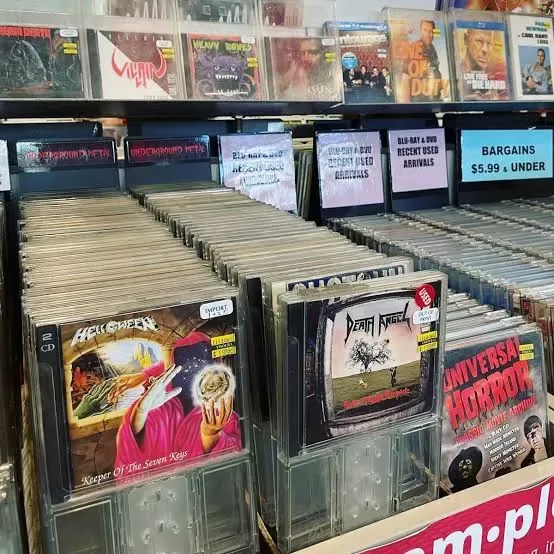
Because it wasn't just music that was in limited supply, it was content about music.
There was no social media, Reddit, YouTube, or even Spotify to help us discover artists or listen to something before we bought it.
Yeah, we might've learned about bands from one of several music mags or locally made fanzines; maybe we traded tapes with friends or with strangers across the globe (whose details we got in the classified section of said music mags).
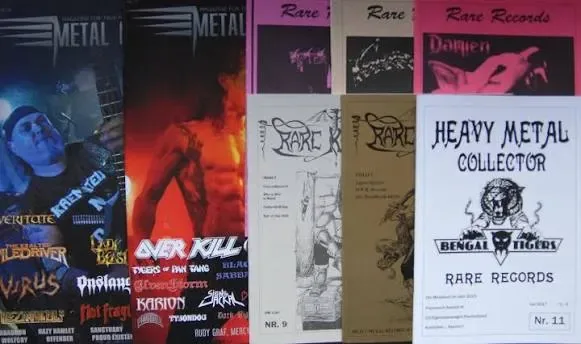
Maybe we heard a track or two on the radio at 2 minutes to midnight (as did I, listening to graveyard shift heavy metal radio shows like Andrew Haug's 3 Hours of Power on Australia's Triple J).
But beyond that, buying an album was like buying a box of chocolates. You often didn't quite know what you were going to get.
Just by virtue of your music being in a record store, you had a much better chance of people discovering and buying your album than you do today [6].
Contrast this with Spotify, where about 81% of the roughly 9.75 million artists that Chartmetric tracked had fewer than 1,000 monthly listeners in 2023 [1]. It is an excruciatingly long tail of artists screaming into the void.
What it took in 1995
By my estimate, somewhere around 25,000 albums were released in the US in 1995, by major labels and independents combined [2].
Recording costs were prohibitive, and the average major label put out roughly 1,500 albums per year, or just 30 a week [3].
If you wanted to go it alone and be indie, you'd better have had a well-paying day job (or rich parents!).
Buying studio time, hiring a producer, covering manufacturing costs and so on could set you back tens of thousands of dollars if you wanted to do it well [4]. And even then, you still needed a hard-to-come-by distribution deal to get your album into stores.
When there's only so much shelf space to go around, distributors and record stores are only going to carry you if they think you'll actually sell. Not much different from getting a D2C product into a big box retailer today.
Most musicians simply couldn't afford the DIY option, nor was it an option that set you up for success, so they chased major label record deals.
And if you were one of the lucky ones, your album was one of a few thousand to a few tens of thousands of titles in your local record store, depending on the store [5].
Suffice to say, the barriers to entry were high. But once you cleared them, you were one of perhaps 8,000 to 12,000 major-label releases that year [3], a far smaller pool than today's.
That gave you a real shot at being heard and building a cult following that could put you on the road and earn you a living, though plenty of major-label albums still flopped [6]. And once you had an album in major record stores, being discovered by listeners was, in my experience, far easier than it is today [6].
What it takes now
On Spotify, roughly 36 million new tracks are released each year, based on the figure of over 100,000 new songs a day [7].
By comparison, 25,000 albums at about 10 tracks each comes to roughly 250,000 tracks in 1995, so Spotify sees on the order of 140 times as many new tracks per year [8]. That's because anybody with a laptop can record music today, and anybody with an internet connection can get it distributed to the world via Spotify and other platforms.
Today you can record an album at home with a DAW like Pro Tools for roughly $1,000 or less, if you already own a laptop and buy entry-level gear.
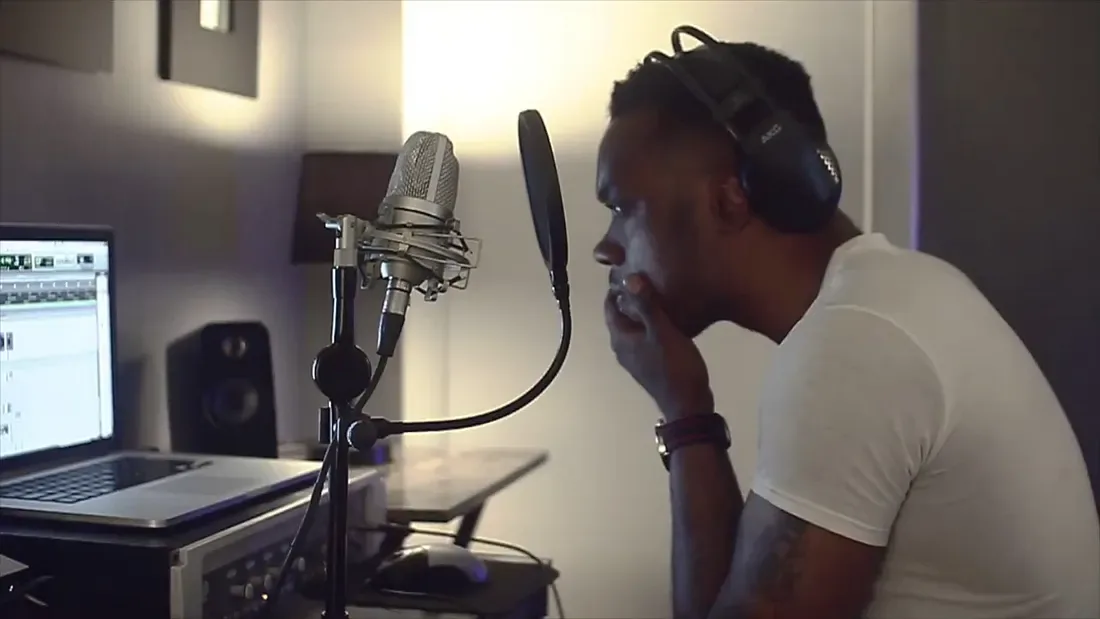
Pro Tools Artist costs $99 a year, and an audio interface, a microphone, headphones and cables add a few hundred dollars more [9]. Getting the album onto Spotify through a distributor typically costs somewhere around $20 to $30 a year [10].
So while the internet has made it cheaper and easier than ever to make your music accessible to a Siberian lumberjack in the cold dead of winter, it has also made it fundamentally harder to stand out. This is the essence of the distribution paradox.
And guess what? AI music generators like Suno are increasingly making the supply side even more crowded.
You don't need to know how to play an instrument, write music, sing, or operate a DAW anymore. Just prompt Suno to do the whole God damn thing for you, wait a few seconds, and voilà, here's your track!
For the week of November 3, 2025, researchers found 202,046 AI-generated tracks released onto Spotify against 238,646 human-made ones, putting AI above 40% of new releases [11].
So far, though, those tracks have won very little attention: 93% had fewer than 1,000 plays, and Spotify says well under 1% of listening goes to fully AI-generated music [11]. The flood is real, but for now its main effect is making the noise louder, not displacing human listening [12].
Of course, if you're a savvy digital marketer, you have a leg up in today's environment. Back in the 80s, marketing almost exclusively amounted to plastering flyers of your band's next gig all over the Sunset Strip in West Hollywood, and spamming magazines and radio stations with copies of your album. Now it means TikTok videos, appearing on podcasts and YouTube channels, collaborating with other artists, getting onto top lists, and all manner of other tactics.
But still, with roughly 36 million new tracks a year on Spotify and rising (up from about 60,000 a day in 2021 to over 100,000 now [7]), and with people's music taste more splintered and fickle than ever, and their attention spans more bombarded and shorter than ever, getting and keeping attention long enough to amount to anything people really care about is f*cking hard.
Which is the real paradox.
In 1995, the scarce thing was access: to a studio, a deal, a spot on the shelf.
Today, access is nearly free, and the scarce thing is attention.
That little metal section at my local record store worked because someone had already narrowed a couple of hundred albums down for me, and a cover and a Parental Advisory sticker did the rest.
Maybe the artists who break through now will be the ones who find a way to recreate that intimacy online.
This isn't true of just musicians, but video-game designers, authors, movie directors, and almost any other creative you can think of.
Today, the shelf space might be infinite.
But the attention has never been more scarce.
Sources and assumptions
Links in the text go to the sources. Anything without a link is my own estimate, and the numbers below explain how I got it.
[1] Chartmetric's 2023 report, via Music Business Worldwide: 19.16% of about 9.75 million tracked artists had more than 1,000 monthly listeners. Monthly listeners are unique people over 28 days. Newer datasets differ at the low end, so call 81% a floor.
[2] My estimate. I couldn't find a published count of 1995 releases, so I assumed US new releases grew from about 14,000 in 1990 to about 36,000 in 1999. That averages out near 25,000, with a range of 18,000 to 32,000. SoundScan misses small indie releases and counts reissues and compilations as new.
[3] My estimate. I assumed majors made up a third to a half of releases, so roughly 8,000 to 12,000 across Warner, Sony, BMG, EMI, PolyGram and Universal, or 1,300 to 2,000 each. That includes reissues and compilations.
[4] My estimate, from memory: $5,000 to $50,000 to record an indie album, and $150,000 to $500,000 or more for a major.
[5] My estimate, from memory: 3,000 to 6,000 titles at discount stores, 10,000 to 25,000 at mall chains, 5,000 to 30,000 at independents, and up to 150,000 at megastores.
[6] Opinion. I have no data on discovery odds then versus now. This is based on my own experience.
[7] Coverage of Spotify's 2025 payout report puts new uploads above 100,000 songs a day, or about 36.5 million a year. Music Business Worldwide reported about 60,000 a day in 2021. The 100,000 figure is secondhand and counts tracks, not albums.
[8] My math. 25,000 albums at about 10 tracks each is roughly 250,000 tracks, and 36.5 million divided by that is about 145. The 10 tracks per album is an assumption. I compared tracks to tracks because many Spotify uploads are singles. If only a quarter to half of new tracks sit on 10-track albums, the gap in albums is closer to 40 to 80 times.
[9] Pro Tools pricing is from Production Expert. The hardware figures are my estimates: interface $100 to $500, mic $100 to $500, headphones or monitors $100 to $1,500, cables $50 to $200. "Under $1,000" assumes you already own a laptop and buy entry-level gear.
[10] My estimate. Distributors like DistroKid charge roughly $20 to $30 a year. I haven't checked current prices.
[11] A University of Chicago study, as summarized by Xenospectrum, classified about 40.75 million tracks. For the week of November 3, 2025 it counted 202,046 AI tracks, 238,646 human-made and 60,022 unclassified. AI made up 5.1% of the catalog it analyzed. The under-1% listening figure is a Spotify spokesperson's comment to ABC News in July 2026, as reported by Chartlex, not a published number. AI detection isn't perfect.
[12] Opinion. The data shows a flood of AI uploads, not yet a flood of AI listening, so I'm calling it more noise rather than displaced listening.
News and insights for innovation, digital transformation, future of work and L&D leaders.
Stay ahead of learning and development, corporate innovation and digital transformation news. Plus the future of work. For leaders in AU, NZ, HK, SG, the US, the UK and Canada.


