
Jack Dorsey wants to kill middle management. He's half right.
Block cut about 4,000 people in February, roughly 40% of the company. A month later Jack Dorsey and Sequoia's Roelof Botha published an essay arguing the middle of the org chart shouldn't exist at all.
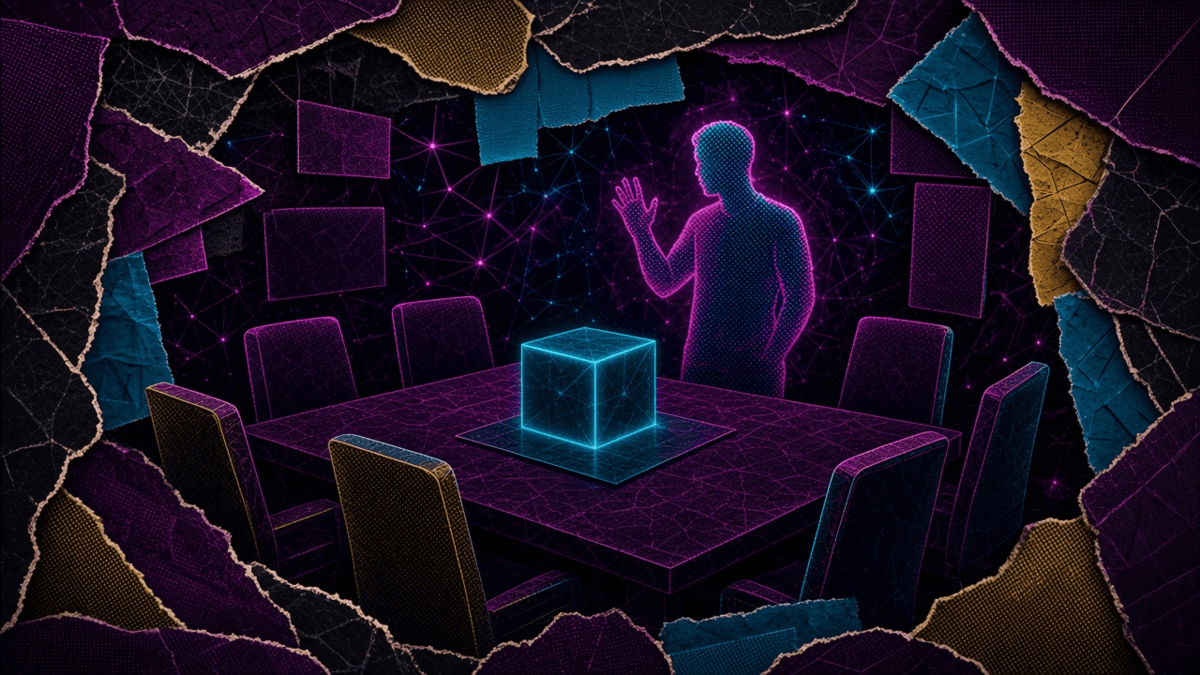
The essay, titled "From Hierarchy to Intelligence" and reported by Fortune, goes after a structure they trace back to the Roman army. In their telling, middle managers exist to "route information, precompute decisions, and maintain alignment across a complex organization." AI can do that routing faster, so the layer goes.
I think they're right about a lot of this. I also think they've left out the hard part.
They're also not alone. Fortune notes Amazon cut 14,000 corporate roles in November to "remove organizational layers," and Meta's AI team now runs at 50 employees to every manager. When the biggest names in tech all move the same way, other boards start asking why they're still paying for the layer. That's why this essay matters well beyond one payments company.
Where Dorsey's right
A lot of middle management time goes on moving information around. Think status updates and the meeting before the meeting. Anyone who's worked in a big company knows how much of the week that eats.
Dorsey and Botha's line on copilots lands too. "Most companies using AI today are giving everyone a copilot, which makes the existing structure work slightly better without changing it," they wrote. That's a fair description of most enterprise AI rollouts I've seen discussed.
Their alternative is a company that keeps a running record of its decisions, plans and problems, which they call a world model, and steers by customer behaviour. "Money is the most honest signal in the world," they wrote. For a payments business that can watch buyers and sellers in real time, that's a reasonable bet.
Where he's wrong
Here's the half they skip. Routing information is only part of what a good manager does. The other part is people. Spotting the person who's struggling before they quit. Backing someone who's about to say something unpopular in a room full of executives.
Dorsey and Botha do say people will sit at "the edge" of the system, sensing things the model can't, like trust, intuition and "the feeling in the room." Fair enough. But sensing the feeling in the room is a skill, and somebody has to teach it to the people who are now expected to do it without a manager.
Most companies cutting layers haven't thought about that. They remove the manager and assume the human work redistributes itself. It doesn't. It lands on senior individual contributors who were never trained for it, or it quietly stops happening.
What leaders should take from this
Even Dorsey and Botha are hedging. "It will be a difficult one, and parts of it will likely break before they work," they wrote about Block's transition. That's an honest line, and worth remembering before you copy the model.
So if your board is reading this essay and getting ideas, ask two questions before anyone draws a new org chart. Which parts of the manager's job can AI genuinely take? And who, by name, picks up the parts it can't?
If you can answer the second question, you might be ready to flatten. If you can't, you're about to find out the hard way what your managers were actually doing. A psychological safety program for the people inheriting that work is a decent place to start.
News and insights for innovation, digital transformation, future of work and L&D leaders.
Stay ahead of learning and development, corporate innovation and digital transformation news. Plus the future of work. For leaders in AU, NZ, HK, SG, the US, the UK and Canada.